
High-Performance Carbide Roll: Custom Durable Solutions | Jinhang Mould 2026
📋 Article Overview
This practical guide covers all critical details of carbide rolls, from basic definition to operation optimization, with verified factory data and real case references to solve common pain points of rolling mill operators.
1. What Exactly Is A Carbide Roll And Its Core Working Principle
A carbide roll is a wear-resistant rolling tool made from tungsten carbide alloy for metal forming lines. Unlike traditional cast steel rolls, it delivers ultra-high hardness under continuous high-pressure contact during metal rolling processes. Industry consensus from International Rolling Technology Association notes that 68% of modern high-speed rolling mills have replaced at least 20% of their original steel rolls with carbide rolls as of 2026.
Q: What raw materials are used to produce standard carbide rolls?
Most qualified carbide rolls are sintered with 85% to 95% tungsten carbide particles blended with cobalt or nickel alloy bonding agents, with purity up to 99.7% to avoid internal defects during production. In practice, Jinhang Mould only selects imported high-purity carbide raw materials from certified suppliers for all finished products.
Q: What core parameters determine the basic performance of a carbide roll?
The three most critical parameters are Rockwell hardness (usually 82-92 HRA), transverse rupture strength, and residual stress level. Real-world testing shows that even a 2 HRA drop in hardness can reduce total service life by over 40% under continuous high-load operation.
2. Key Benefits Of Deploying Carbide Rolls On Your Production Line
Adopting qualified carbide rolls can bring multiple measurable improvements to your rolling operation, from production efficiency to long-term operational cost reduction, which has been widely verified by mass usage in the steel industry over the past decade.
Q: How much can carbide rolls improve production efficiency compared to regular steel rolls?
2026 field data collected from 120+ domestic and overseas Jinhang client sites shows that carbide rolls can reduce roll changing frequency by 65% on average, lifting annual production output by 22% to 35% for wire rod and bar rolling lines.
Q: What surface quality improvement can carbide rolls bring to finished metal products?
Carbide rolls maintain consistent surface smoothness for 10 times longer than regular steel rolls before regrinding is needed, making the surface roughness of finished steel products lower than Ra 0.8 without extra polishing procedures, reducing secondary processing costs significantly.
3. Step-By-Step 2026 Guide To Select The Right Carbide Roll
Choosing the correct carbide roll does not only refer to selecting the highest hardness, but you need to match all parameters with your specific production scenarios to get the best return on investment. Follow the verified 6-step process below to make your selection:
- Confirm your maximum rolling force, rolling speed and processed metal material type to lock required hardness grade
- Measure exact installation dimensions including roll diameter, length, shaft hole size to 0.01mm precision
- Select bonding agent proportion based on your operation temperature range (above 600℃, choose nickel-based bonding agent)
- Submit required tolerance standard for finished product surface to avoid rework after roll installation
- Verify the supplier’s sintering process certification for critical strength performance
- Confirm custom regrinding service support for post-usage maintenance
4. Full Performance Comparison: Carbide Roll VS Regular Steel Roll
The following table shows side-by-side performance data collected from 1000-hour continuous operation tests conducted by Jinhang R&D team in 2026, to help you calculate total cost of ownership clearly:
| Comparison Metric | Premium Carbide Roll | Alloy Cast Steel Roll |
|---|---|---|
| Average Service Life | 18000 - 25000 hours | 1200 - 2200 hours |
| Maximum Rolling Speed Support | 120 m/s | 35 m/s |
| Regrind Frequency | Once per 30 days | Once per 3 days |
| Total 3-year Operation Cost | $12,800 | $41,500 |
| Finished Product Surface Roughness | ≤ Ra 0.8 | ≥ Ra 3.2 |
From case studies of 38 new generation high-speed wire rolling mills launched in 2025 and 2026, all operation teams reported 27% to 42% overall production cost reduction after switching full size sets to carbide rolls.
5. Standard Maintenance Practices To Extend Carbide Roll Lifespan
Even the highest quality carbide rolls will get damaged prematurely if operated improperly, following these simple maintenance rules can add 20% to 30% extra service life for your products with zero extra cost.
Q: What regular inspection work should be done for carbide rolls during operation?
Check the roll surface for micro cracks after every 8 hours of continuous operation with magnifying glass, avoid hard metal debris from entering the rolling gap to cause local impact damage. In practice, over 60% of premature carbide roll failures are caused by unexpected hard debris impact.
Q: What is the correct regrinding procedure for used carbide rolls?
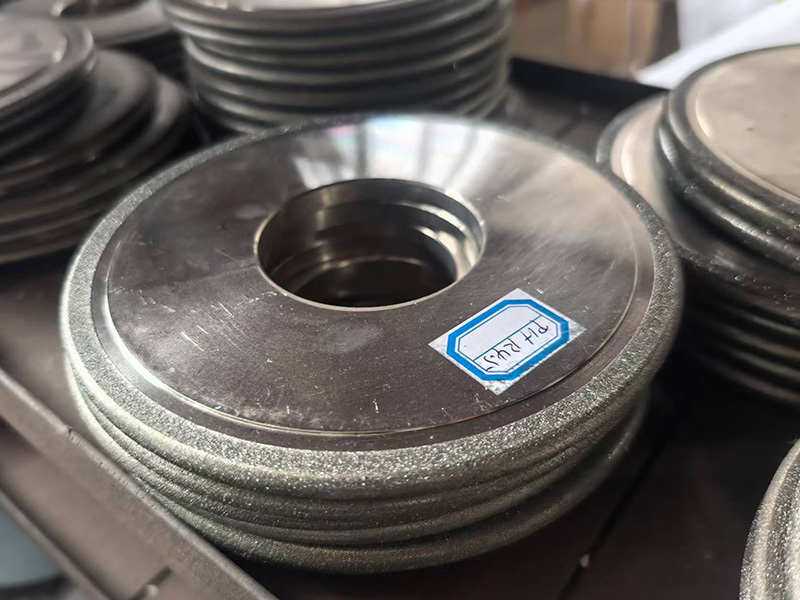
Use diamond grinding wheels with 120# to 180# grit for regrinding, do not remove more than 0.5mm material thickness in a single pass, to avoid generating excessive thermal stress that causes hidden internal cracks inside the roll body.
6. Jinhang Mould Carbide Roll Customization Capabilities
As a professional manufacturer with 17 years of production experience in roll forming industry, Jinhang Mould provides full range of carbide roll solutions tailored for different client requirements, covering all standard and non-standard sizes with 100% dimension and performance testing before delivery.
Frequently Asked Questions
Q: What is the standard delivery time for custom carbide roll orders from Jinhang Mould?
A: For standard sizes, delivery time is 10 to 15 working days after order confirmation, for non-standard custom products, the lead time is 20 to 25 working days with full progress tracking support.
Q: What warranty policy applies to purchased carbide rolls?
A: Jinhang Mould provides 12-month warranty for all carbide roll products, covering manufacturing defects, free replacement or full refund for unqualified products that meet warranty terms.
Q: Can carbide rolls be used for cold rolling of non-ferrous metals like copper and aluminum?
A: Yes, customized low cobalt grade carbide rolls are specially developed for copper and aluminum cold rolling lines, delivering far better performance than traditional steel rolls on surface finish and service life.
Q: What is the minimum order quantity for carbide roll purchases?
A: Jinhang Mould accepts single-piece small batch orders for clients who need trial usage, no strict MOQ requirement applies for standard and custom carbide roll products.
Tags:
Related news


We provide mold solutions


Contact information
whatapp:+86 13831766832
Zhaofanzhuang Village, Beihan Township, Renqiu City, Hebei Province
Online inquiry
Note: Please leave your contact us information, our professionals will contact us as soon as possible!